This is a past event.


Cold Tea: Humour, Death, Tragedy, and Fear
Cold Tea: Humour, Death, Tragedy, and Fear
Moderation: Pedro Vieira
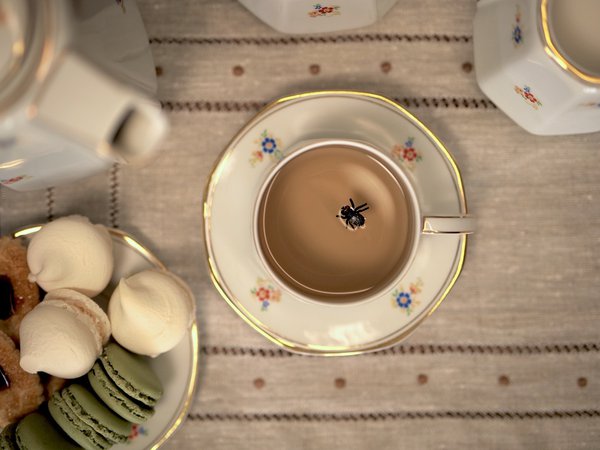
In evolutionary theory, which came first? Tea or the fly? Is humour a distinctive trait of human evolution, or, on the contrary, a remnant of our uncivilised nature? Is it possible to refine humour, like the sugar we add to tea, or will the best joke always be someone slipping on a banana skin? Could the history of humour tell the story of who we are as human beings?To discuss this topic, we are joined by Cristina Sampaio, a children’s and young adult illustrator who, from 1986 on wards, began working as a cartoonist for various national publications (including Público and Expresso) and international ones (such asThe New York Times and Kleine Zeitung), and by Verena Alberti, who holds a PhD in Literary Theory from the Gesamthochschule Siegen,Germany (1993), and a postdoctoral qualification in history education from the Institute of Education, Universityof London (2009). She is an Associate Professor at the Faculty of Education of the Rio de Janeiro State University (UERJ), in the field of methods and techniques for teaching history.
17 MAR 7:00 p.m.
Tea, Herbal Tea, and Kombucha: Humour and Cultural Differences
Marco Neves, Maria João Cruz
Book your seat
Is humour universal? Why is it that, pretty much everywhere, we tell the same jokes, changing only the nationality of the characters? Or are there cultural types of humour? Identity-based humour? Is it true that only one type of fly falls into each cup of tea?
25 MAR 7:00 p.m.
Lack of Tea: Humour, Taboos, and Censorship
Rui Lopes and Rita Luís, Mélanie Toulhoat
Book your seat
Can humour be so powerful that it needs to be eliminated? Can humour shake the essential pillars of our societies? Make teacups crack? What danger does uncontrolled humour pose that leads some censorship powers to want to ban it? And is it even possible to forbid humour? Are there teas that eliminate flies?
1 APR 7:00 p.m.
Cold Tea: Humour, Death, Tragedy, and Fear
Cristina Sampaio and Verena Alberti
Book your seat
In evolutionary theory, which came first? Tea or the fly? Is humour a distinctive trait of human evolution, or, on the contrary, a remnant of our uncivilised nature? Is it possible to refine humour, like the sugar we add to tea, or will the best joke always be someone slipping on a banana skin? Could the history of humour tell the story of who we are as human beings?
01 APR 2026
WED 19:00
Free admission*
Duration 2h
*By pre-booking or collecting your ticket 15 minutes before the event (limited to the venue's to capacity).
On the day of the event, pre-bookings that have not been collected will be made available 15 minutes before the start of the event.
BIOGRAFIAS
Cristina Sampaio
Nasceu em Lisboa. Trabalha desde 1987 como ilustradora infanto-juvenil, área onde publicou mais de uma vintena de livros. A partir de 1986 começou a trabalhar como cartunista para diversas revistas e jornais, nacionais (entre eles Público e Expresso) e internacionais (entre eles The New York Times e Kleine Zeitung).
Está representada em inúmeras publicações coletivas de ilustração e de cartoon. Trabalhou em cenografia e em multimédia. Realiza curtas de animação para a TV, integrada no coletivo Spam Cartoon. Presente em numerosas exposições em Portugal e no estrangeiro.
O seu trabalho mereceu quatro exposições retrospectivas (2001, 2018 e 2019). Detentora de diversos prémios, com destaque para o Prémio Stuart de Desenho de Imprensa (2006 e 2010) e o 1º Prémio de cartoon editorial do World Press Cartoon (2007), onde recebeu igualmente duas menções honrosas (2009 e 2015). Em 2009 o Festival da Amadora atribuiu-lhe o prémio de melhor ilustração infantil pelo livro Canta o Galo Gordo. Desde 2009 faz parte do Cartooning for Peace.
Verena Alberti
É licenciada e bacharel em História pela Universidade Federal Fluminense (1983), mestre em Antropologia Social pelo Programa de Pós Graduação em Antropologia Social (PPGAS) do Museu Nacional da Universidade Federal do Rio de Janeiro (1988), doutora em Teoria da Literatura pela Universitat Gesamthochschule Siegen, Alemanha (1993), e pós-doutora em Ensino de História pelo Institute of Education da University of London (2009). É professora adjunta da Faculdade de Educação da Universidade do Estado do Rio de Janeiro (Uerj), na área de Métodos e Técnicas de Ensino de História. Na Uerj exerce a função de coordenadora institucional do Programa Institucional de Bolsa de Iniciação à Docência (Pibid), contemplado pelo Edital Pibid/Capes 7/2018, e integra o colegiado da Comissão Acadêmica Local do Mestrado Profissional em Ensino de História (ProfHistória). Atua também como professora de História da Escola Alemã Corcovado, no Rio de Janeiro. Entre 1985 e 2018 foi pesquisadora do Centro de Pesquisa e Documentação de História Contemporânea do Brasil da Fundação Getulio Vargas (CPDOC-FGV), em cuja Escola de Ciências Sociais ministrou disciplinas de graduação e onde integrou o Programa de Pós-graduação em História, Política e Bens Culturais. Tem experiência no campo da História, com ênfase em Teoria e Filosofia da História e em História Contemporânea do Brasil, com destaque para as seguintes áreas: ensino de história, história oral, narrativa, história das relações raciais e história do pensamento sobre o riso. Publicou, entre outros, "O riso e o risível na história do pensamento" (1999, 2002, 2011), "Manual de história oral" (1990, 2004, 2013) e "Ouvir contar: textos em história oral" (2004), e organizou "Histórias do movimento negro no Brasil" (em co-autoria com Amilcar Araujo Pereira, 2007).
Guests
Cristina Sampaio and Verena Alberti
Project design and direction
Miguel Fragata and Inês Barahona
Communication
Mafalda Guedes Vaz
Executive production
Luna Rebelo and Sofia Bernardo
Production
Formiga Atómica
Formiga Atómica is a structure supported by the República Portuguesa – Cultura, Juventude e Desporto / Direção-Geral das Artes and Câmara Municipal de Lisboa / Polo Cultural Gaivotas | Boavista